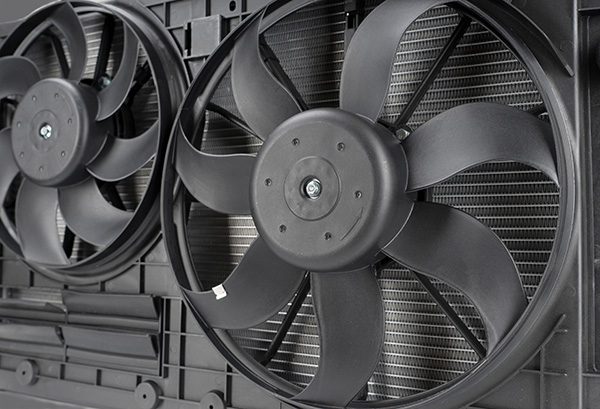
An engine cooling fan that continues operating after shutdown is not always a sign of failure. Many modern vehicles are programmed to keep the fan on when coolant temperature, underhood temperature, or air conditioning pressure remains high after the engine stops.
The fan may run for several minutes while heat leaves the radiator, condenser, turbocharger area, and engine compartment. Concern is warranted when it runs much longer than normal, operates after every short trip, drains the battery, or continues even when the engine is cold.
Normal Heat Management After Shutdown
The engine stops producing combustion heat as soon as it is turned off, but stored heat remains in the cylinder head, engine block, exhaust system, and turbocharger on equipped vehicles. Coolant circulation may slow or stop, while temperatures in certain areas can briefly rise because airflow through the engine compartment has ended.
The vehicle’s control module can respond by keeping the electric fan active. Some vehicles also use an electric coolant pump after shutdown to move heat away from the engine or turbocharger. This programmed operation protects seals, wiring, plastic components, and other parts exposed to high temperatures.
Hot Weather And Heavy Driving Increase Fan Time
Cooling fan operation after shutdown is more common after driving in high outdoor temperatures, climbing hills, sitting in traffic, towing, or using the air conditioner for an extended period. Each condition increases the amount of heat the cooling system must release.
Parking immediately after demanding driving can also leave the engine compartment hotter than usual. The fan may continue until sensor readings fall below a programmed limit. A cycle lasting a few minutes under these conditions can be normal, especially when the temperature gauge remains in its usual range.
The Air Conditioning System Can Keep The Fan Active
The radiator fan also moves air through the air conditioning condenser. Refrigerant pressure can remain elevated after the ignition is turned off, particularly on a hot day or after prolonged low-speed driving.
Some control systems continue fan operation to lower condenser pressure and protect the A/C system. The fan may also run more often when the condenser is partially blocked by leaves, dirt, insects, or bent fins because restricted airflow makes it harder to release heat.
Common conditions that can extend fan operation include:
- High outdoor temperature
- Extended idling
- Heavy traffic
- Long A/C use
- Steep climbs
- Towing or heavy loads
- Restricted condenser airflow
- Recent high-speed driving followed by immediate parking
Fan activity should still stop once temperatures and pressure reach acceptable levels. A fan that continues for an excessive period requires testing.
A Faulty Coolant Temperature Sensor
The engine computer relies on a coolant temperature sensor to determine how hot the engine is. If the sensor sends an incorrect high-temperature signal, the computer may command the fan to remain on even when the engine is not actually overheated.
A damaged connector, corroded terminal, shorted wire, or failed sensor can create the same result. Some vehicles switch the fan on continuously as a protective response when the temperature signal is missing or unreasonable.
Diagnostic testing includes comparing the reported coolant temperature with the actual engine temperature. A scan tool can display the sensor reading, while a temperature measurement at the engine or cooling system provides a reference. Replacing the sensor without verifying its signal can leave a wiring or control problem unresolved.
Stuck Relays And Fan Control Modules
Electric cooling fans receive power through relays, electronic control modules, or solid-state circuits. A relay with contacts stuck closed can keep sending power to the fan after the computer has stopped requesting operation.
Fan control modules can also fail internally and hold the circuit on. In some vehicles, the control module is attached directly to the fan assembly. Testing must determine whether the fan is being commanded on or receiving power because a relay or module is stuck.
Electrical testing may include:
- Checking fan command data
- Testing relay operation
- Measuring power and ground
- Inspecting connectors for heat damage
- Checking control wires for shorts
- Measuring fan motor current draw
A fan motor that draws excessive current can damage relays, connectors, or control modules. The complete circuit should be evaluated rather than replacing only the first failed electrical part.
Low Coolant Or A Cooling System Problem
Low coolant can create hot areas inside the engine and prevent the temperature sensor from reading consistently. A leak, trapped air, weak water pump, restricted radiator, thermostat fault, or damaged pressure cap can also cause elevated temperature after driving.
The dashboard temperature gauge may not always reveal an early cooling problem. Some gauges remain near the center across a broad temperature range, and certain faults develop only under specific driving conditions.
An inspection should include the coolant level when the engine is cold, visible leaks, dried coolant residue, hose condition, radiator airflow, fan speed, thermostat operation, and coolant circulation. Never remove a pressure cap from a hot cooling system because hot coolant and steam can escape forcefully.
When Fan Operation Becomes A Battery Concern
A fan that runs for several minutes usually does not harm a healthy battery. A fan that operates for an hour or continues until the battery is discharged is not normal.
Repeated extended operation can leave the vehicle unable to start, especially when the battery is already weak. Disconnecting the battery may stop the fan temporarily, but it does not correct the failed relay, sensor circuit, control module, or cooling system problem. It may also erase stored information technicians need during testing.
Regular maintenance should include cooling system checks, battery testing, and attention to changes in fan behavior. A new pattern of extended fan operation deserves service before it causes overheating or repeated battery discharge.
Get Cooling Fan Service In San Francisco, CA, With Pete's, Inc.
Pete's, Inc. in San Francisco, CA, can test coolant temperature readings, fan commands, relays, control modules, wiring, refrigerant pressure, and cooling system performance.
Contact us to schedule service if your cooling fan runs excessively after shutdown, drains the battery, or operates when the engine is cold.