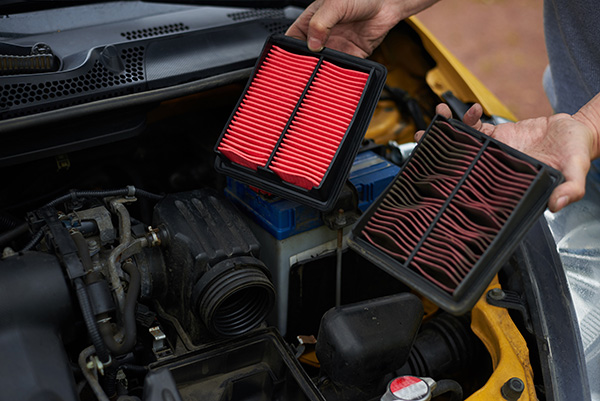
Wildfire smoke does more than make the sky hazy. Fine ash, soot, and airborne particles can get pulled into your car's ventilation system whenever the fan is running, especially when outside air is drawn through the HVAC system.
That extra contamination can load up a cabin air filter faster than normal driving would. In an area like San Francisco, where smoke can move in from fires far outside the city, a filter can go from looking acceptable to heavily coated in a short time.
Wildfire Smoke Contains Very Fine Particles
Cabin air filters are designed to catch dust, pollen, road debris, and other airborne material before it reaches the passenger compartment. Wildfire smoke adds a much finer layer of contamination.
Those small particles can settle deep into the filter media instead of sitting only on the surface. Over time, airflow becomes more restricted. At our shop, we sometimes see filters that look dark gray or almost black after smoky conditions even though they have not been in the car for very long.
A Clogged Filter Can Reduce Airflow From the Vents
One of the first things drivers notice is weaker airflow. The fan sounds like it is working, but less air comes through the vents than it used to.
That becomes especially annoying when you need the defroster or air conditioning. A restricted cabin filter makes the blower motor work harder to move air through the system, and the windshield can take longer to clear on cool or damp mornings. If airflow drops noticeably after a smoky stretch of weather, it's worth checking the cabin filter.
Smoke Odors Can Stay in the HVAC System
A dirty cabin air filter can hold onto smoke odor long after the outside air has cleared.
Every time the fan comes on, that smell can return because the filter media is still carrying soot and other particles. A fresh filter can help, but if the odor has been strong for a long time, we also look at the evaporator case, vents, and surrounding HVAC surfaces for contamination.
If the smell changes from smoky to musty, there could be another issue such as moisture buildup in the HVAC box. We separate the odor source instead of assuming the filter is responsible for everything.
You May Need to Replace the Filter Earlier Than the Normal Interval
Cabin air filter replacement intervals are only a starting point. A vehicle driven through construction dust, heavy pollen, wildfire smoke, or dusty roads can load a filter much faster than one used in cleaner conditions.
Signs the filter may be ready early include:
- Weak airflow from the vents
- Persistent smoky or dusty odor
- Visible dark buildup on the filter
- More dust entering the cabin
- Poor defroster performance
- The blower sounding louder than before
During an inspection, we assess the filter's actual condition instead of replacing it automatically by mileage. If the pleats are packed with debris, waiting for the normal interval won't help.
Recirculation Mode Can Reduce Outside Smoke Intake
When wildfire smoke is heavy, using the recirculation setting can reduce how much outside air the HVAC system pulls into the cabin.
That does not make the car completely sealed, and some outside air still enters through small openings and body vents. Still, recirculation reduces the amount of smoky air passing through the system during the worst conditions.
Once the air outside improves, switching back to normal ventilation from time to time helps keep the cabin fresh. We also recommend avoiding running the windows open when smoke is especially heavy if you are trying to keep the interior cleaner.
Not All Cabin Filters Offer the Same Filtration
Basic cabin filters mainly focus on larger dust and pollen particles. Some vehicles can use higher-efficiency filters or filters with activated carbon that help with finer particles and odors.
That does not mean every upgrade fits every vehicle. The filter still needs the correct size and airflow characteristics for the HVAC system. A filter that is too restrictive can create its own airflow problems.
If wildfire smoke is a regular concern, we can check whether the vehicle has a suitable upgraded filter option. The important part is using a filter designed for the car rather than forcing in something that only looks similar.
Check the Filter After Heavy Smoke Events
You do not need to replace the cabin air filter every time smoke appears in the forecast. A quick inspection after a prolonged smoke event gives a much better answer.
Regular maintenance helps because we can compare the filter's condition from one service to the next. If the vehicle has gone through several days or weeks of poor air quality and airflow has dropped, checking the filter sooner is reasonable.
A clean filter will not remove every trace of wildfire smoke from the cabin, but it gives the ventilation system a much better chance of moving air properly and keeping a large amount of contamination out.
Get Cabin Air Filter Service In San Francisco, CA, With Pete's, Inc.
If your vents have weaker airflow, the cabin smells smoky, or your vehicle has spent time in wildfire smoke, Pete's, Inc. in San Francisco, CA, can inspect the cabin air filter and HVAC airflow to see whether the filter needs replacement.
Schedule a cabin air filter inspection to make sure smoke, dust, and debris aren't restricting the ventilation system.