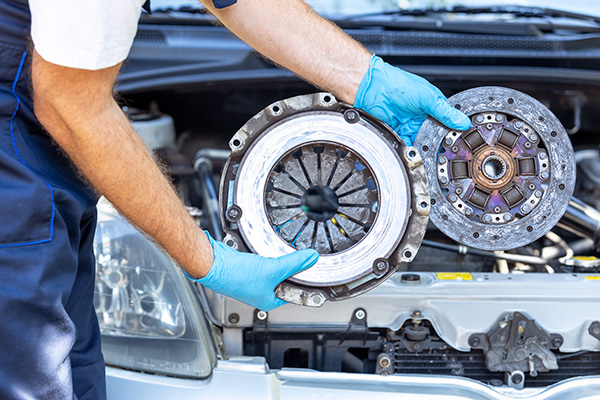
The clutch pressure plate supplies the clamping force that holds the friction disc against the flywheel. When you press the clutch pedal, the release mechanism acts on the pressure plate so the engine and transmission can separate. A problem with that operation can affect acceleration, gear engagement, or pedal feel.
These five signs warrant inspection, but none identifies the pressure plate on its own. The disc, flywheel, release bearing, hydraulic system, and mounts can produce overlapping symptoms. On a German car with a conventional manual clutch, checking these related parts helps define the scope of the repair before removing the transmission.
1. Clutch Slip Under Acceleration
If engine RPM rises without a matching increase in road speed while the clutch pedal is fully released, the clutch may be slipping. It can first appear under greater load, such as a hill climb or acceleration in a taller gear. The symptom may become more frequent as the clutch loses its ability to hold torque.
Reduced pressure-plate clamping force is one possible cause. A worn disc, oil contamination, or a release mechanism that keeps pressure on the clutch can also cause slip. Continuing to apply heavy throttle adds heat, so schedule an inspection rather than repeating hard pulls to see how much worse the symptom becomes.
2. Clutch Judder When Moving From a Stop
A clutch that grabs unevenly can make the car shake as you release the pedal. You may notice it when backing into a space or beginning a climb in San Francisco traffic. Uneven pressure-plate contact, overheating, or damaged friction surfaces can contribute, but the feeling alone doesn't identify the cause.
A contaminated disc, flywheel problem, worn engine mount, or transmission mount can also create judder. The technician should note whether the vibration appears only during clutch engagement or continues after the pedal is released. That difference helps separate the clutch’s contact surfaces from another source of movement in the drivetrain.
3. Difficult Gear Selection With the Clutch Depressed
If the clutch does not release fully, selecting a gear can become difficult even with the pedal down. You may notice resistance or grinding, especially when shifting into reverse or first gear. A pressure plate that isn't moving correctly may be involved, but hydraulic travel and release components also need inspection.
Low hydraulic fluid, a leak, trapped air, or a cylinder fault may reduce release movement. The gearbox or linkage can also create selection problems. Forcing the lever into gear can add damage, so describe which gears are affected and whether the issue changes with the engine running. Those details help guide the next checks.
4. A Clutch Pedal That Feels Different
A new change in pedal effort, travel, or return can indicate that part of the release system is not operating as intended. A pedal may become heavier, feel uneven, or fail to return consistently. Pressure-plate spring damage is possible, but you must evaluate the connection between the pedal and clutch before blaming the plate.
The hydraulic system, pedal mechanism, release fork (where fitted), and bearing can cause the same sensation. A change in engagement point is useful to report, but it is not a universal measure of clutch wear because designs differ. Check for an intermittent pedal problem even if the clutch behaves normally by the time the vehicle arrives.
5. Clutch Noise That Changes With Pedal Position
A squeal, scrape, or other new sound that changes as you press the pedal may involve release components or contact near the pressure plate. Damaged fingers or an unsuitable contact pattern can be part of the concern. Evaluate the sound with pedal position and engine operation recorded clearly.
Release bearings, pilot bearings where used, gearbox components, and flywheels can also make noises associated with clutch operation. A noise alone should not lead to automatic pressure-plate replacement. The useful question is which part is producing the sound and whether the finding agrees with the other symptoms and visible evidence.
Pressure-Plate Inspection Should Include the Clutch Assembly
External checks come first because you can evaluate some hydraulic or pedal faults without removing the transmission. If you must access the clutch assembly, consider the pressure plate, disc, flywheel, release components, and possible leaks together. The manufacturer’s procedures determine which parts are reusable and which measurements are needed.
A dual-mass flywheel requires its own checks and should not be resurfaced as though it were a conventional solid flywheel. The repair estimate should explain both the failed component and related wear. The right parts, proper alignment during assembly, and correct fastening procedures help the replacement clutch operate as intended.
Get Clutch Pressure-Plate Inspection in San Francisco, CA, With Pete’s, Inc.
If your German car slips, judders, or has a changing clutch pedal, Pete’s, Inc. in San Francisco, CA, can evaluate the clutch and its related systems. Tell us when the symptom occurs, how the pedal feels, and whether gear selection has changed so we can inspect the components most relevant to your concern.
Contact us to schedule a clutch inspection before continued use adds more wear.